Developing Heart Coherence Using Music: Get Your Heart and Brain in Sync

Developing Heart Coherence Using Music
Your heart isn’t just a pump. It’s sending messages to your brain all day. When those messages are chaotic, you feel anxious, scattered, reactive. When they’re smooth and rhythmic, you feel calm, focused, creative.
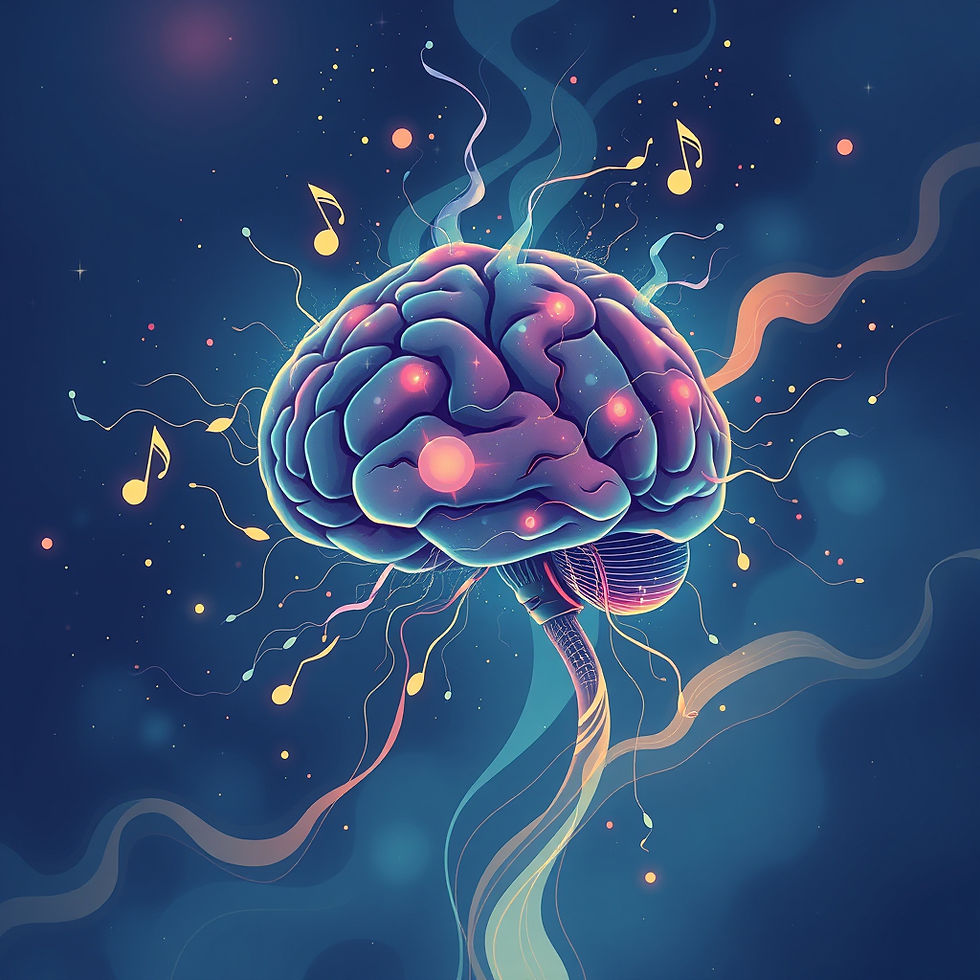
That smooth state is called heart coherence. And music is one of the fastest ways to get there, the best way to Developing Heart Coherence Using Music!
So What Is Heart Coherence?
Think of your heart rate like a song. Most people assume it should be steady — 72 bpm, tick-tick-tick. It’s not. A healthy heart actually speeds up slightly when you inhale and slows down when you exhale. That natural variation is called HRV — Heart Rate Variability.
High HRV = good. It means you’re adaptable, resilient, chill under pressure.
Low HRV = you’re stuck in fight-or-flight mode.
Coherence is when your HRV forms a smooth, wave-like pattern instead of jagged spikes. Picture a sine wave vs. static on a TV. The HeartMath Institute found that in coherence, your heart, brain, and nervous system sync up. You think clearer, regulate emotions better, and even learn faster.
Where Music Comes In
Music hacks your physiology. Rhythm entrains your heart. Melody guides your breathing. Harmony shifts your emotions. You’ve felt it — a slow ballad making you exhale, a driving beat making your pulse race.
Researchers at Stanford found that 60 bpm music — roughly the resting human heart rate — can shift you into coherence within minutes. But it’s not just tempo. It’s how you listen.
The 3-Step Music Coherence Practice
You don’t need a lab or fancy gear. Just headphones and 5 minutes.
1. Pick Your Anchor Track
Choose music at 60-80 bpm with no jarring changes. Think Weightless by Marconi Union, classical adagios, soft piano, or ambient Indian alap. Film scores work too — Hans Zimmer’s Time or A.R. Rahman’s Roobaroo instrumental.
Avoid lyrics at first. Words pull your brain into analysis mode.
2. Breathe to the Beat
This is the magic. Inhale for 5 seconds, exhale for 5 seconds. That 10-second cycle = 6 breaths per minute, the sweet spot for coherence.
Let the music set the count. Most 60 bpm tracks naturally fit this. Bass drum = inhale. Strings swell = exhale.
Put one hand on your chest, one on your belly. Feel your heart area soften.
3. Add a Positive Feeling
Coherence isn’t just breathing. It’s emotion. While you listen, recall a moment of appreciation, care, or calm. Your pet. A sunset. Finishing a good practice session.
This combo — rhythmic breathing + positive emotion + music — tells your heart to send “all safe” signals to your brain. HRV smooths out. Cortisol drops. DHEA rises. You literally change your chemistry.
Why This Matters for Musicians
Heart coherence isn’t just wellness fluff. It’s performance tech.
Stage fright: Coherence before going on stage steadies your hands and keeps pitch centered. Pro orchestras now use this.
Practice quality: 5 minutes of coherence before practicing = better focus, faster memory encoding. Your brain learns in a coherent state.
Ensemble playing: When a group breathes and feels together, timing locks in. That’s why choirs sound transcendent — they’re literally in heart sync.
Try This Today: The 2-Song Reset
Next time you’re stressed, angry, or fried:
Song 1: Something that matches your mood — get it out. Rock, metal, fast tabla. 2 minutes.
Song 2: Your coherence anchor track + 5-5 breathing. 3 minutes.
You’ll feel the shift. That’s your nervous system downshifting from chaos to flow.
The Point de Mire Take 🌟
At Point de Mire Music, we teach technique. But technique without regulation is just notes. When your heart and brain are in sync, music stops being work and starts being you.
Coherence is a skill. Music is the gym. And every time you practice it, you’re training yourself to stay calm, creative, and connected — on stage and off.
Want a guided playlist to practice this? We’ve built a free “Coherence Collection” with timed 5-5 breathing tracks, Indian classical breathers, and Western ambient pieces.
👉 Join the Point de Mire Music WhatsApp Community to get the playlist + weekly coherence tips from our coaches: https://whatsapp.com/channel/0029VbCe4u1KAwEj9TQXNo0h
👉DM us @https://www.instagram.com/pointdemiremusic and receive a flat 10% off on your Customized Musical Program!
Sources: HeartMath Institute, McCraty et al. 2009, Stanford School of Medicine Music & Mind Lab


Comments