AI Composers That Read Your Biometrics: Can Your Smartwatch Write the Song That Fixes Your Mood in Real Time?

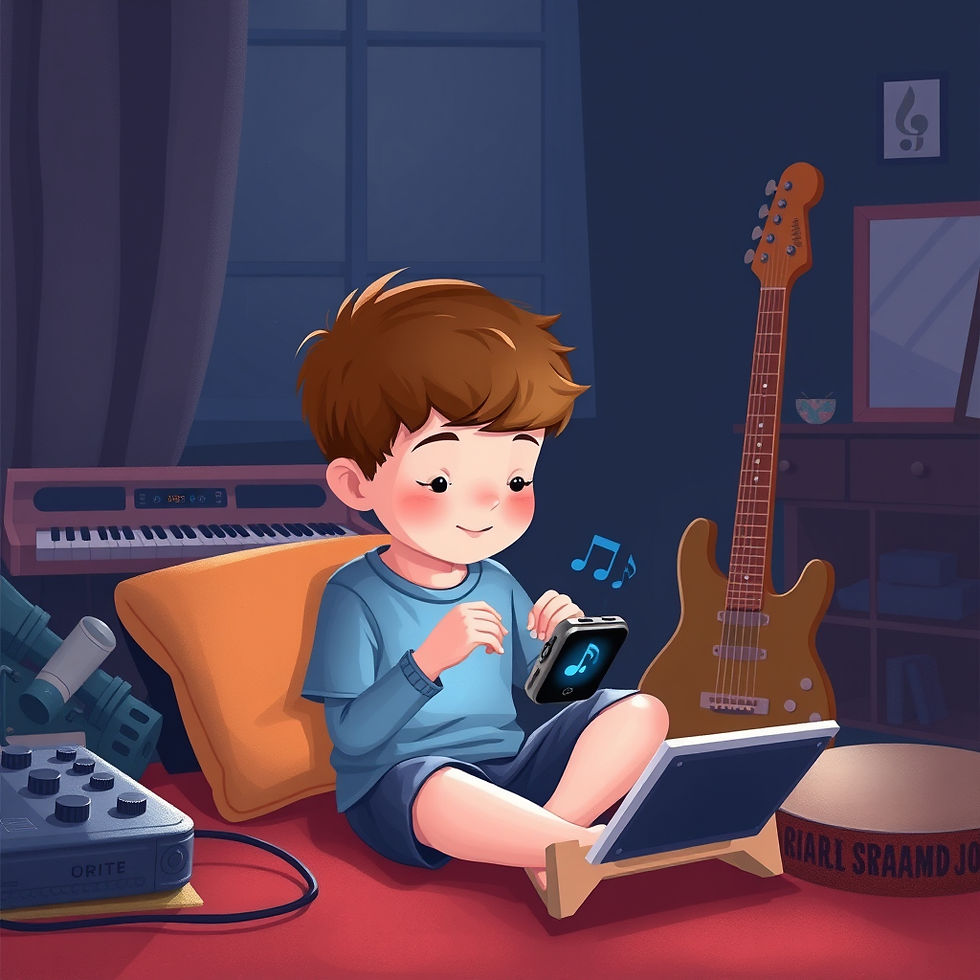
Your smartwatch just buzzed. Not a text. A warning. Heart rate 98 bpm. HRV tanking. Skin conductance spiking. You’re sliding into stress and you don’t even know it yet- AI Composers That Read Your Biometrics!!
Now imagine this: before you reach for coffee or doomscroll, your watch talks to an AI composer. Thirty seconds later, your earbuds fill with a track you’ve never heard. The bass sits at 60 bpm, matching your resting state. A gentle pad rises in sync with your breath. Within two minutes, your HRV climbs 12%. Cortisol drops. You’re back!!
Science fiction? Not anymore!
The Biometric Loop: From Data to Dopamine
Your wearables are already tracking the raw material of mood. Heart rate variability, or HRV, measures how flexible your nervous system is. Low HRV means you’re stuck in fight-or-flight. High HRV means you adapt, recover, and focus. Electrodermal activity catches micro-sweat from stress before you feel it. Sleep stages, respiratory rate, even blood oxygen — it’s all streaming 24/7.
AI composers close the loop. They ingest that data in real time and generate music as a targeted intervention. Not a playlist. A prescription.
Here’s how it works under the hood:
Sense: Your Apple Watch, Oura Ring, or Whoop detects a biometric shift — rising stress, incoming migraine aura, focus slump at 3 pm.
Interpret: Machine learning models map those signals to emotional states. Low HRV + high beta brainwaves = anxious. Theta dominance + slow breathing = creative flow.
Compose: Generative AI, trained on neuroscience datasets, builds music to counteract or enhance that state. For anxiety, it might lower tempo by 8% every 20 seconds, add 432Hz-aligned drones to stimulate vagal tone, and layer binaural beats at 6Hz to nudge you toward alpha waves.
Adapt: The system keeps listening. If HRV doesn’t improve in 90 seconds, it shifts key from minor to major, thins the instrumentation, or introduces rhythmic entrainment — syncing your breath to a pulsing kick drum at 0.1Hz, the resonance frequency of your cardiovascular system.
Companies like Endel, Brain.fm, and MediMusic are already FDA-cleared or in trials for this. Endel’s algorithm uses weather, circadian rhythm, and heart rate to generate soundscapes that claim a 7x increase in focus. MediMusic is testing “music medicine” in UK hospitals to reduce preoperative anxiety by 25% without drugs.
Why This Beats Your Spotify Playlist 🎧
Your favorite “chill” playlist is static. It doesn’t know you just had a fight with your boss. It doesn’t care that your REM sleep was trash last night. It plays the same song at the same tempo whether you need calming or activation.
Biometric AI composes in the moment. Stressed? It gives you descending melodies and sparse textures to lower sympathetic arousal. Sluggish? It injects syncopation and bright major chords to fire up dopaminergic pathways. It’s music that listens before it plays.
The mechanism is old. Music therapy has used rhythm, tempo, and mode to regulate emotion for decades. What’s new is speed and personalization. We’re moving from “music for relaxation” to “music that measures your relaxation and adjusts note by note.”
The Limits: Don’t Throw Out Your Therapist Yet ⚠️
This isn’t magic. Biometric data is noisy. A high heart rate could be a HIIT workout or a panic attack. Without context, the AI guesses wrong. Over-reliance risks emotional outsourcing — you stop learning to self-regulate because you expect the algorithm to do it.
Privacy is the other elephant. Your HRV, sleep, and stress patterns are intimate data. Who owns the song generated from your breakdown? Who trains on it? Until regulations catch up, read the fine print.
And taste matters. An AI can hit the right BPM, but can it make you feel something? The uncanny valley of music is real. The best systems right now blend AI with human composers — AI handles structure and adaptation, humans inject soul.
The Point de Mire Take 🎯
At Point de Mire, we believe music is the most precise emotional technology we have. But tech without intention is just noise.
Biometric AI composition is a tool, not a cure. Its power is feedback. It shows you, in real time, that your state is not fixed. You can hear your nervous system shift from chaos to coherence in one song. That awareness alone builds agency.
The future isn’t your watch DJ-ing your life. It’s you learning your own patterns so deeply that you eventually become the composer. The AI just hands you the baton sooner.
Real transformation happens when tech meets ritual. Use the AI track to enter the state, then do the work — the breath, the journaling, the hard conversation. Music opens the door. You walk through.
Your Next Move
Your biometrics are already writing a song. The question is whether you’re listening.
We’re beta-testing “Sonic Biofeedback Sessions” at Point de Mire Music: 20-minute experiences where your live HRV scores a custom composition in the room with you. You’ll see your nervous system respond to harmony, feel your breath entrain to rhythm, and leave with a data report + the exact audio recipe that shifted you.
This isn’t for everyone. It’s for the ones tired of generic meditation apps and ready to treat their mood like the precision instrument it is.
👉 Ready to hear what your body sounds like? Book your ‘Sonic Biofeedback Session’ — DM us ‘BIO’ and we’ll send you the next available slot.
👉 DM us @https://www.instagram.com/pointdemiremusic and receive a flat 10% off on your Customized Musical Program!
👉 Be a part of our WhatsApp Community: https://whatsapp.com/channel/0029VbCe4u1KAwEj9TQXNo0h


Comments